Recycling and Sustainability for Hedge Trimming Services
 Hedge Trimming and sustainable landscape care go hand in hand. Our approach to hedge trimming, hedge maintenance and hedgerow management focuses on keeping green waste out of landfill while supporting local ecology. From the moment a hedge-cutting job is booked to the final tidy, we assess how materials can be reused, composted or sent to appropriate local facilities. This page outlines our recycling percentage target, the transfer stations we use, our partnerships with charities, and the steps we are taking to operate a low-carbon fleet.
We set a clear, measurable recycling percentage target for all hedge-care operations: we aim to recycle 90% of all collected green waste by weight within three years. That target covers trimmings, brash, woodchip and topsoil that arise from hedge-cutting and pruning. Achieving this relies on best-practice on-site segregation, immediate chipping where appropriate, and prioritising reuse locally ??? for example as mulch for community gardens or substrate for municipal parks.
 Local transfer stations play a vital role in meeting our goal. We routinely use borough transfer facilities and municipal green-waste hubs that accept separated garden waste streams and process them into compost or bulk mulch. Typical borough approaches to waste separation ??? such as separate brown-bin green waste collections, dedicated green skips at transfer stations, and yard-based composting operations ??? make it possible to divert the majority of hedge trimmings away from residual waste and into productive reuse.
Our Targets and Partnerships
Partnerships with charities and community organisations extend the lifespan of materials removed during hedge maintenance. We donate larger branches and logs to woodland charities and community woodbanks where they become useful for habitat piles, wildlife refuges, or coppicing projects. Smaller woodchip and mulch are provided to allotment associations and urban community gardens for paths and moisture retention. These collaborations reflect our belief that good hedge-cutting should feed local green infrastructure rather than disappearing as waste.
 We work with a range of non-profit partners depending on the type of material: organisations that run community orchards, shelters that reuse timber for small projects, and food-growing groups that need compost and mulch. In municipalities where borough councils operate strict separation rules, we align our collection methods with their systems so that donated materials are processed correctly and legally ??? for instance ensuring brown-bin compostables do not mix with metal or plastic residues from maintenance sites.
Specific recycling activities relevant to our area include:
- On-site chipping for immediate reuse as mulch and erosion control;
- Segregation and transfer of green waste to local composting facilities;
- Delivery of suitable timber to charities or biomass processors;
- Reuse of topsoil and brash in municipal landscaping projects.
Low-Carbon Vans and Operational Efficiency
Transitioning our fleet is central to reducing the carbon footprint of hedge-cutting services. We are investing in low-carbon vans: a phased replacement plan prioritises electric vehicles for short urban routes and plug-in hybrids or Euro 6 compliant engines for longer runs. Route optimisation and telematics reduce mileage and idle time, cutting fuel consumption while enabling more efficient collections for recycling and transfer station visits.
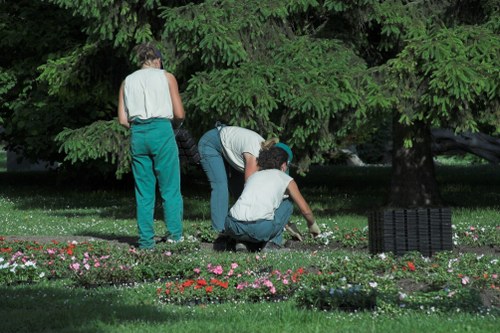 Staff training complements vehicle upgrades. Crews are trained to minimise multiple trips by consolidating loads destined for the same transfer station or charity partner, and to perform immediate on-site sorting so reusable materials are not contaminated. This operational discipline helps us meet our 90% recycling target while reducing emissions from transport.
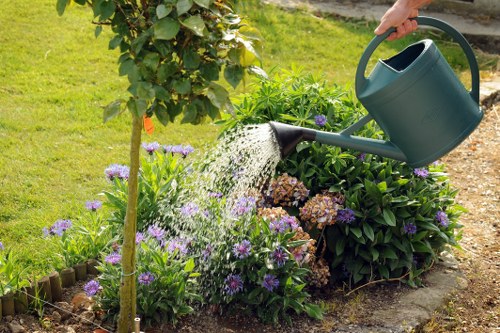 Measuring success is iterative: we publish annual diversion rates, weight-based recycling figures for green waste, and progress on fleet electrification. Our reporting focuses on practical outcomes ??? how many tonnes of hedge trimmings were converted to mulch, how many community projects benefitted from donated timber, and the percentage reduction in fleet emissions year-on-year. We also track local compliance: in boroughs with mandatory separate collections we report how our operations support residents and councils to meet wider municipal recycling goals.
Operational standards we follow include on-site chipping and separation protocols, secure storage to prevent contamination of compostable material, and scheduled deliveries to approved transfer stations. We avoid sending material to landfill unless no other legal or safe pathway exists, and even then we seek to minimise volumes through pre-processing and reuse. Our teams are encouraged to use best practice in hedgerow management ??? pruning at the right season, leaving wildlife features where possible, and recycling all reusable outputs.
Community benefit is central: by converting hedge-cutting by-products into useful resources we support circular economy principles at a neighbourhood scale. Charity partners receive wood for projects, allotments receive mulch, and borough parks get compost and topdressings. These outcomes demonstrate that responsible hedge trimming can be both a service and a source of value for the places we work in.
Finally, we commit to continuous improvement. Targets, partnerships and vehicle upgrades are reviewed annually to ensure that our hedge maintenance, hedge-cutting and broader landscape services remain aligned with evolving environmental standards. Our ambition is simple: to make sustainable hedge care the norm ??? keeping green waste working for communities, not filling landfill.